Designing Private Sanctuaries: Creating Calm and Cohesive Interiors
Life is loud. Between busy schedules, constant notifications, and the general pace of modern living, your home can either add to the noise—or become the place that brings you back to yourself. At Decor Avenue, we design spaces for busy people who want their home (or Airbnb) to feel like a true retreat: calm, cohesive, and deeply liveable.
Designing a private sanctuary isn’t about creating a “perfect” space. It’s about shaping an interior that helps you exhale the moment you walk in—visually restful, emotionally grounding, and practical enough to keep daily life from turning into cluttered chaos.
Why calm interiors matter more than ever
A calm interior supports your nervous system. When your space is visually busy, poorly lit, or constantly disorganised, it can subtly keep you on edge. On the flip side, when your home is cohesive and considered, it reduces decision fatigue and creates a baseline of ease.
Think of it this way: your home is the one environment you can control. Designing it intentionally is one of the simplest ways to build more calm into your everyday.
What makes a space feel like a sanctuary?
1. A clear design direction first;
Cohesion or flow, is what makes a home feel settled. It doesn’t mean everything matches—it means everything belongs.
· Choose one guiding style (warm modern, coastal, contemporary classic, etc.)
· Repeat a small set of finishes across the home (e.g., timber tone, metal finish, stone colour)
· Keep your colour palette consistent from room to room
When the design language is consistent, your brain stops scanning for “what doesn’t fit,” and the space feels instantly calmer.
2. A soothing palette (without defaulting to bland)
Calm doesn’t have to mean beige. A sanctuary palette can still have personality—just in a controlled, intentional way.
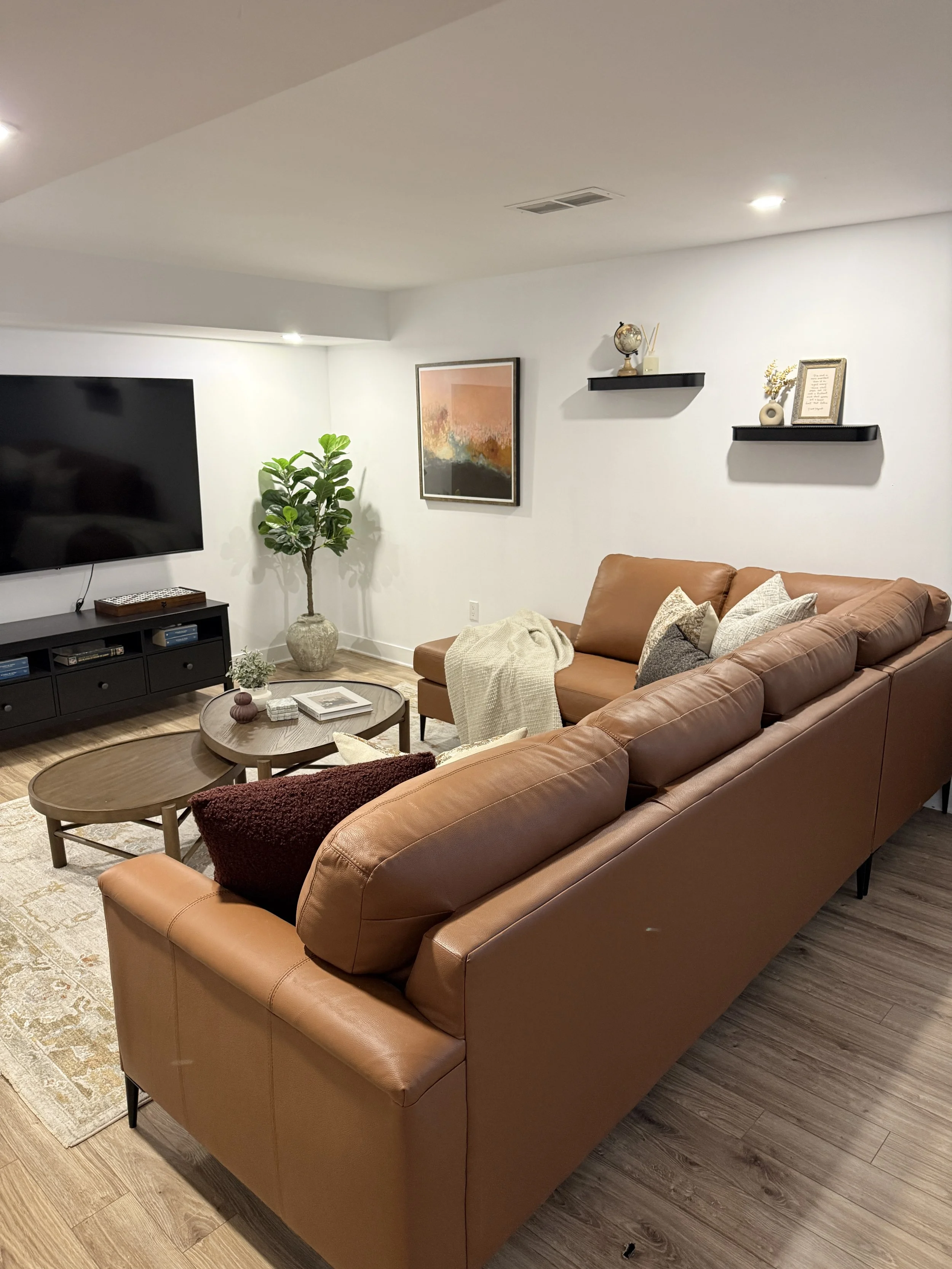
· Start with 2–3 core neutrals (warm white, soft greige, gentle taupe)
· Add 1–2 accent colours that feel grounding (deep olive, inky blue, clay, muted blush)
· Use colour in larger, quieter blocks rather than lots of small competing pops
If you love bold colour, use it strategically: one hero wall, a statement sofa, or a rich rug—then keep surrounding elements quieter so the room still feels restful.
3. Texture over clutter
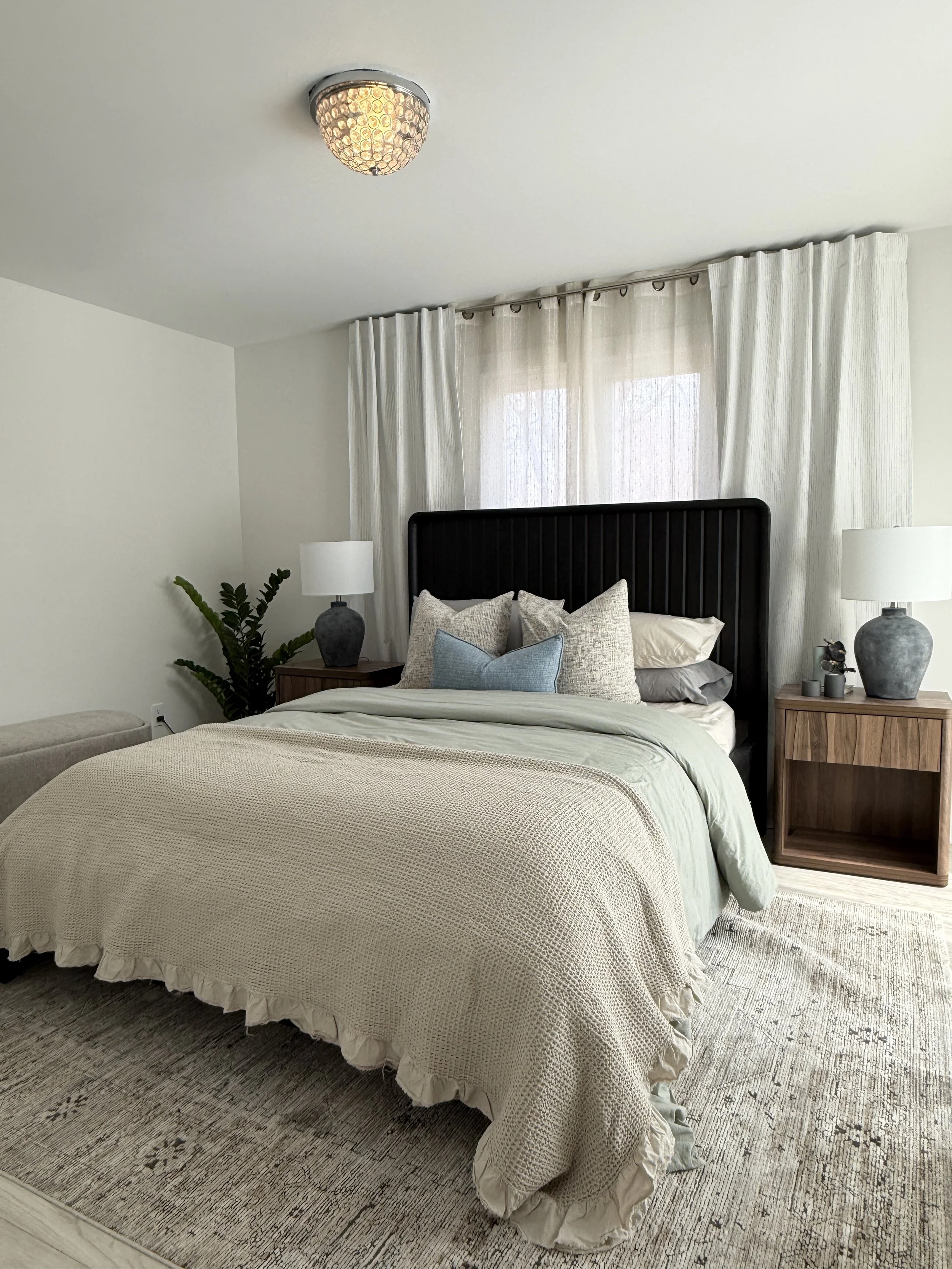
Texture creates warmth and depth without visual noise. It’s one of the fastest ways to make a space feel comforting.
· Linen, boucle, wool, and cotton for softness
· Timber and rattan for warmth
· Matte finishes to reduce glare
· Layered window furnishings to soften light
A sanctuary is often more about how a space feels than how it photographs.
4. Lighting that supports the mood
Overhead downlights alone can make a home feel harsh and clinical. Sanctuary lighting is layered and adjustable.
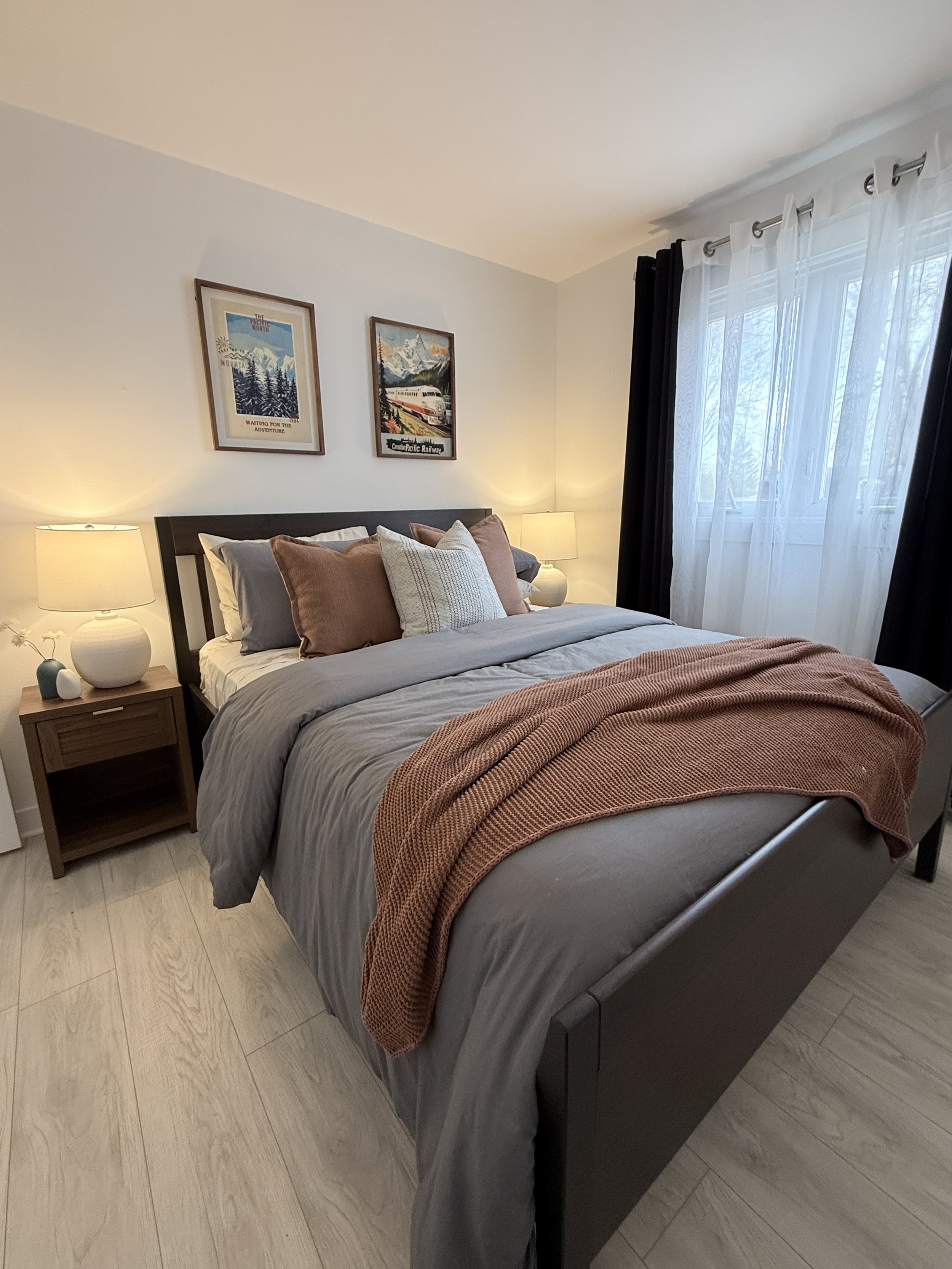
· Ambient lighting: soft overall light (dimmers help)
· Task lighting: practical light where you need it (kitchen, reading corners)
· Accent lighting: lamps and wall lights to create glow and depth
Aim for warm globes and multiple light sources per room. The goal is a gentle, even atmosphere—especially at night.
5. Thoughtful layout and breathing room
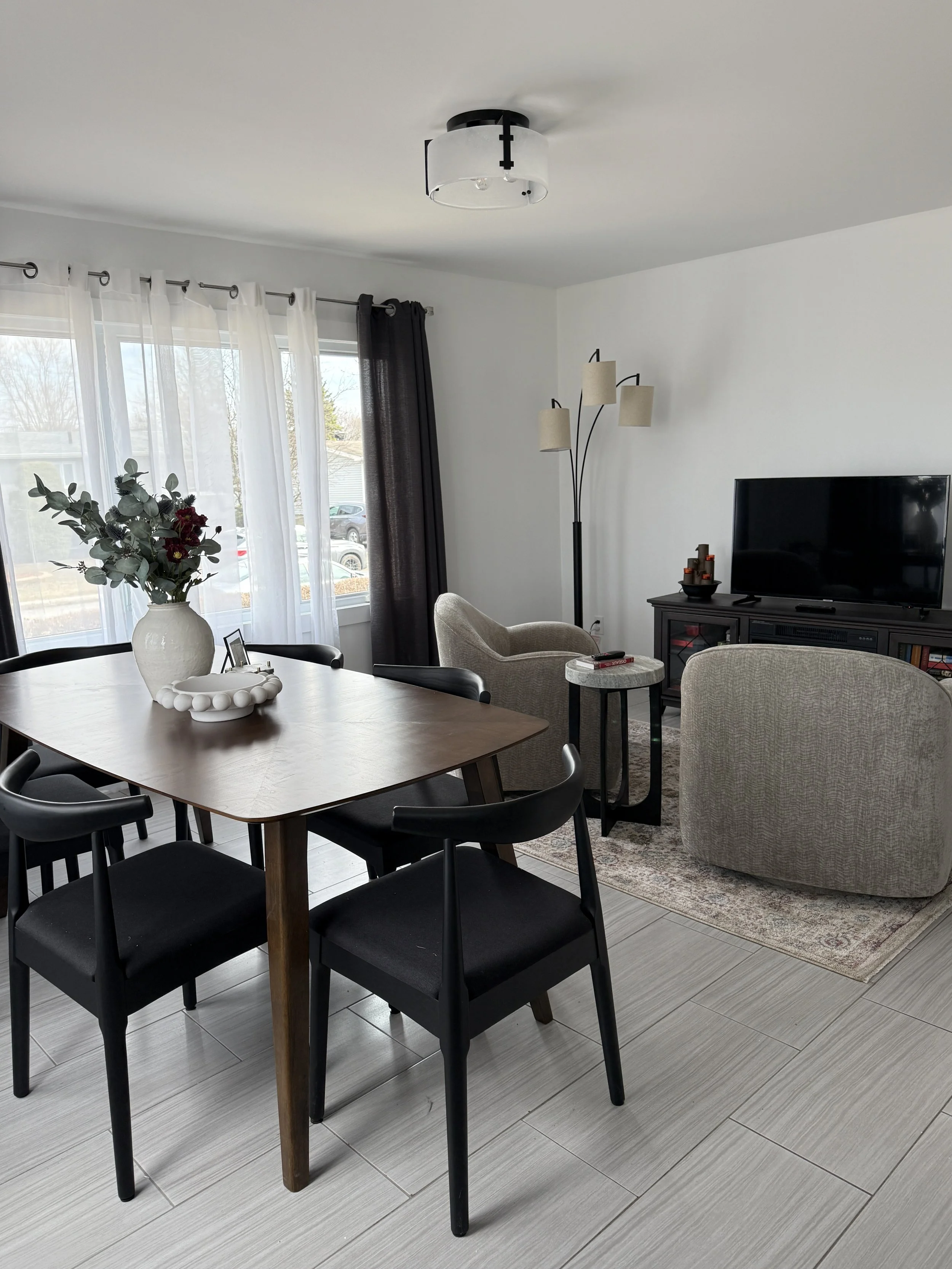
A calm home has space to move—physically and visually. That doesn’t mean minimalism; it means editing.
· Keep walkways clear and furniture scaled to the room
· Avoid pushing every piece against a wall “just because”
· Create zones (relaxing, working, dining) so the room knows what it’s for
If a room feels “off,” it’s often the layout—not the decor.
Designing calm for real life (not just for show)
A sanctuary only works if it’s easy to maintain. That’s where smart storage and practical choices come in.
· Closed storage to hide everyday items
· Drop zones near entry points to prevent clutter spread
· Durable, easy-clean fabrics if you have kids or pets
· A place for everything (and fewer “random” surfaces that collect piles)
Cohesive interiors aren’t created once—they’re supported by systems that make it easy to keep things feeling calm.
Start small: sanctuary moments you can create this week
You don’t need a full renovation to shift the feeling of your home.
1. Choose one room to “calm down” and remove anything that doesn’t belong.
2. Add one soft lighting source (a lamp) and swap to warm globes.
3. Introduce one comforting texture (a throw, a rug, linen cushions).
4. Edit your colour palette—remove competing tones and simplify.
5. Create one intentional corner: a reading chair, a bedside moment, a calm entry.
Small changes compound quickly when they’re aligned with a clear direction.
The takeaway
Designing private sanctuaries is ultimately about creating a home that supports you—your energy, your routines, and your sense of peace. Calm and cohesive interiors don’t happen by accident. They come from intentional choices: consistent palettes, layered lighting, comforting textures, and layouts that make everyday life feel easier.
If you want your home to feel like a true sanctuary, start with cohesion. Once the space has a clear direction, calm becomes something you can design for—room by room, choice by choice.
Ready for a calmer, more cohesive home?
When you’re ready, send us a message and tell us what you want your home to feel like—calm, confident, and completely you.